
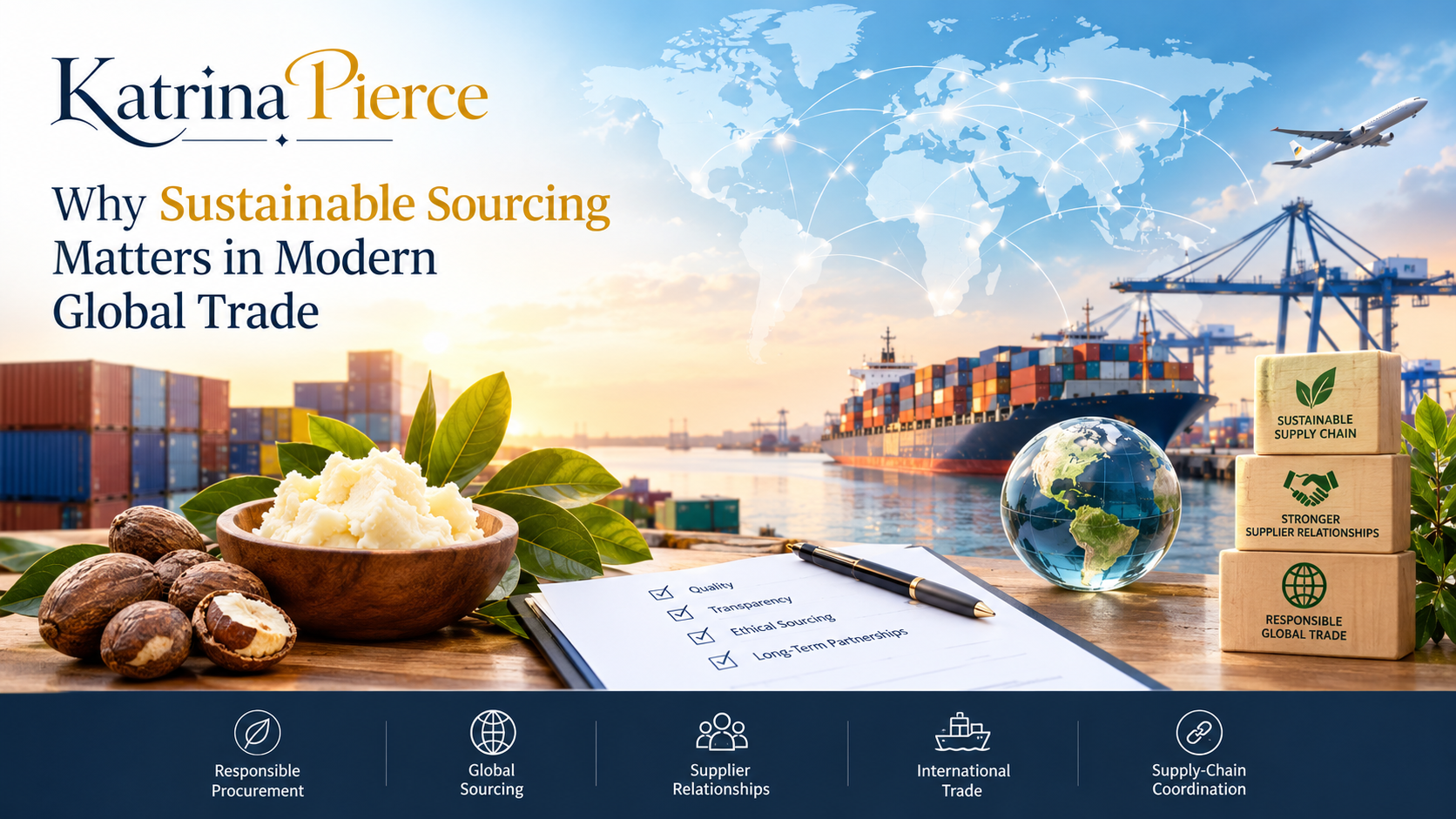
Global trade has changed significantly as businesses become more connected across countries, suppliers, manufacturers, logistics providers, distributors, and customers. In the past, sourcing decisions were often centered on price, availability, production capacity, and delivery speed. These factors remain important, but modern businesses are increasingly looking at a wider set of considerations when choosing where and how to source products.
This is where Katrina Pierce Sustainable Sourcing represents a professional perspective focused on the relationship between responsible sourcing, supplier relationships, international trade, and long-term business development.
Sustainable sourcing is not simply about choosing a supplier that offers a product at the right price. It involves understanding where products originate, how suppliers operate, how relationships are managed, and whether a sourcing network can remain reliable over time. For businesses operating internationally, these considerations can influence quality, transparency, supply continuity, and relationships throughout the global supply chain.
What Sustainable Sourcing Means for Modern Businesses
Sustainable sourcing brings together several elements of responsible business activity. A company may consider the origin of a product, supplier practices, quality expectations, communication, logistics, environmental considerations, and the ability to maintain dependable relationships.
The objective is not to remove commercial considerations from procurement. Instead, sustainable sourcing encourages businesses to look beyond a single transaction and consider the broader sourcing relationship.
A supplier may provide an attractive price, but businesses also need to consider whether communication is reliable, quality can be maintained, production can continue, and expectations are clearly understood. These factors become especially important when products move across borders and involve multiple stages before reaching the final customer.
For this reason, sustainable sourcing can become part of a broader approach to responsible procurement and international business.
Why Supplier Relationships Matter
Strong supplier relationships are an important part of sustainable sourcing. International trade frequently involves people and organizations operating in different countries, time zones, regulatory environments, and business cultures.
Clear communication can help businesses understand product requirements, production schedules, quality expectations, and logistical considerations. When communication is consistent, buyers and suppliers can work together more effectively when circumstances change.
A long-term relationship can also create a better understanding between business partners. Instead of treating sourcing as a series of individual transactions, companies can develop relationships based on communication, transparency, reliability, and shared expectations.
The professional positioning around Katrina Pierce Sustainable Sourcing connects sustainable sourcing with supplier relationships and international trade. This creates a broader view of sourcing in which the relationship between buyers and suppliers becomes part of long-term business planning.
Transparency Creates Greater Understanding
Transparency is another important part of sustainable sourcing. A modern buyer may want to understand more about the journey of a product before it reaches the market. Depending on the industry, this can include information about producers, suppliers, processing, transportation, documentation, and other stages of the supply chain.
Greater transparency can help businesses identify where information is available and where additional communication may be required. It can also help buyers establish clearer expectations with suppliers.
Transparency does not mean that every supply chain is simple or completely visible. International sourcing can involve several organizations and geographic locations. Instead, the goal is to create better visibility and communication throughout the sourcing process.
For businesses working with natural ingredients and international suppliers, this understanding can be particularly valuable because sourcing decisions can involve producers, exporters, logistics providers, buyers, and other participants.
Sustainable Sourcing and International Trade
International trade depends on connections between businesses in different markets. A product may begin with a producer, move through processing or export channels, pass through logistics networks, and eventually reach an international buyer or consumer market.
Each stage introduces opportunities for communication and coordination. Sustainable sourcing encourages businesses to think about these connections rather than viewing procurement as an isolated purchasing activity. A sourcing decision can affect product quality, delivery expectations, supplier relationships, customer confidence, and future availability.
The project positioning for Katrina Pierce places sustainable sourcing alongside international trade, responsible procurement, global sourcing, supplier relationships, and supply-chain coordination. This connection provides a useful framework for understanding why responsible sourcing is becoming part of broader international business discussions.
Responsible Decisions Can Support Long-Term Planning
Businesses operating in global markets often have to consider changing conditions. Supplier availability, transportation challenges, customer requirements, regulations, and market conditions can influence sourcing decisions.
A responsible sourcing approach encourages businesses to evaluate suppliers carefully and maintain open communication. It also encourages organizations to think about continuity rather than focusing only on the immediate purchasing decision.
Long-term planning can involve developing dependable supplier relationships, maintaining clear product requirements, reviewing supplier performance, and keeping communication channels open.
These practices do not eliminate uncertainty. Instead, they can help businesses understand their sourcing networks more clearly and make procurement decisions with a broader view of the relationship between suppliers, products, and markets.
The Role of Shea Butter in Sustainable Sourcing
Shea butter provides an important example of how sustainable sourcing connects natural ingredients with international trade. The project materials position Shea Nexus, operating under Avenue 27, within the context of connecting West African producers with international buyers.
A natural ingredient such as shea butter can move through several stages before reaching an international market. Producers, suppliers, exporters, logistics providers, buyers, and other business participants can all contribute to the sourcing process.
This makes communication and coordination important. International buyers may need to understand product requirements, sourcing relationships, quality expectations, and logistical arrangements.
The broader lesson is that sustainable sourcing is connected to the entire business relationship rather than one individual purchasing decision.
Building More Responsible Sourcing Relationships
A sustainable sourcing strategy can begin with relatively practical questions.
- Where does the product come from?
- Who are the suppliers involved?
- How are expectations communicated?
- How is product quality managed?
- What information is available about the sourcing process?
- How reliable is the relationship over time?
These questions can help businesses develop a more complete understanding of their sourcing networks. The answer will naturally vary by industry and product. However, the principle remains consistent: responsible sourcing requires businesses to look beyond price and consider the wider relationship surrounding a product.
For Katrina Pierce, sustainable sourcing is positioned within a professional framework that includes responsible procurement, global sourcing, supplier relationships, international trade, and supply-chain coordination.
Looking Ahead
The future of global sourcing will continue to involve stronger expectations around transparency, supplier relationships, responsible procurement, and reliable international networks.
Businesses that understand their sourcing relationships can develop a clearer picture of how products move from origin to market. This can support better communication between buyers and suppliers and encourage more thoughtful long-term planning.
Sustainable sourcing should therefore be understood as part of a broader approach to modern global business. It connects commercial requirements with relationships, transparency, coordination, and responsible decision-making.
The professional association between Katrina Pierce, international trade, responsible procurement, global sourcing, and supplier relationships reflects this wider perspective.
Conclusion
Sustainable sourcing is becoming an important consideration for businesses participating in modern global trade. It encourages organizations to look beyond price and availability and consider the origins of products, supplier relationships, transparency, quality, communication, and long-term reliability.
For international businesses, sourcing is rarely a single transaction. It is part of a larger network involving producers, suppliers, logistics providers, buyers, and markets across different countries.
A responsible approach can help businesses better understand these connections and build sourcing relationships around clear expectations and long-term thinking.
The Katrina Pierce perspective fits within this broader professional framework, connecting sustainable sourcing with international trade, responsible procurement, global sourcing, supplier relationships, and supply-chain coordination.
As global business continues to evolve, understanding these relationships will remain an important part of building responsible and resilient sourcing networks.